






Differences Between Real Love and Emotional Attachment
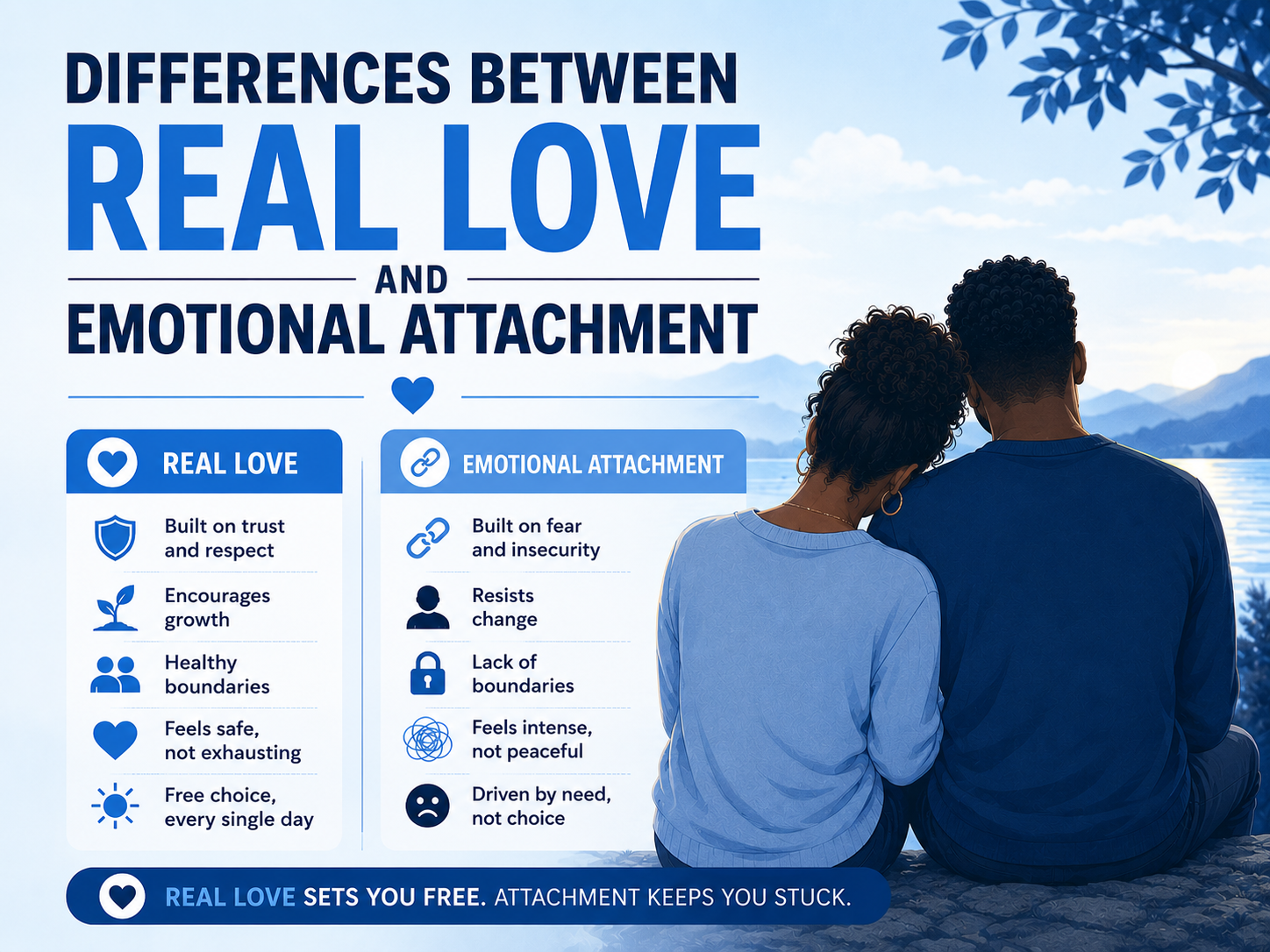
Real love and emotional attachment can sometimes feel similar at the beginning of a relationship, but they are fundamentally different. Real love is healthy, peaceful, supportive, and mature. It allows freedom, growth, trust, and emotional stability. Emotional attachment, however, is often driven by fear, insecurity, dependence, and the need for constant emotional validation. While attachment may feel intense, intensity alone does not equal love.
1. Real Love Gives Freedom While Emotional Attachment Creates Dependence
Real love allows both partners to grow as individuals without feeling threatened by independence. When two people truly love each other, they understand that having personal goals, hobbies, friendships, and private time is healthy for the relationship. Real love is built on trust and confidence rather than fear. A loving partner does not try to control every movement or decision because they know that genuine affection cannot be forced. For example, if one partner wants to travel for work or continue their education in another city, real love supports such growth even when it is difficult emotionally. The relationship becomes a source of encouragement rather than restriction.

Emotional attachment, on the other hand, often creates unhealthy dependence. A person may feel they cannot function emotionally without the other person constantly being available. Instead of supporting independence, attachment may produce jealousy, clinginess, and fear whenever space is needed. For instance, someone emotionally attached may become angry simply because their partner spends time with friends or family. They may constantly demand reassurance or attention because their happiness depends heavily on the relationship. In many cases, attachment is less about loving the other person and more about fearing loneliness or abandonment.
2. Real Love Is Built on Trust While Emotional Attachment Is Driven by Fear
Trust is one of the strongest foundations of real love. When people truly love each other, they believe in each other’s intentions and loyalty. They do not constantly suspect betrayal without evidence. Even during disagreements, trust helps them communicate calmly and solve problems maturely. A couple in real love understands that nobody is perfect, but honesty and consistency create emotional security. For example, a husband who trusts his wife will not panic every time she receives a phone call from a male colleague because trust already exists within the relationship.

Emotional attachment is usually controlled by fear. Fear of losing someone, fear of being replaced, or fear of being alone often becomes the driving force of the relationship. This fear can lead to possessive behaviors such as checking phones, monitoring social media activities, or becoming suspicious unnecessarily. Instead of peace, the relationship becomes emotionally exhausting. A person may say, “I cannot live without you,” not because of deep love but because they are emotionally dependent. Such fear-based relationships often become unstable because fear constantly creates insecurity and conflict.
3. Real Love Encourages Growth While Emotional Attachment Prevents Growth
Real love motivates people to become better versions of themselves. Loving partners encourage each other to pursue dreams, improve character, and overcome weaknesses. They celebrate each other’s achievements rather than feeling threatened by them. In healthy relationships, both individuals continue to grow mentally, emotionally, spiritually, and financially. For example, a woman who truly loves her partner may encourage him to return to school or start a business even if it temporarily reduces the amount of time they spend together.

Emotional attachment can prevent personal growth because the relationship becomes centered on emotional comfort instead of progress. One partner may unconsciously hold the other back out of fear that success or change could weaken the relationship. For instance, an emotionally attached person may discourage their partner from relocating for a better opportunity simply because they cannot handle the distance emotionally. Over time, this creates resentment because one or both individuals begin sacrificing important life goals merely to maintain emotional closeness.
4. Real Love Accepts Imperfections While Emotional Attachment Idealizes People
Real love recognizes that nobody is perfect. People who genuinely love each other understand weaknesses, flaws, and mistakes while still choosing commitment and respect. They do not expect perfection because they know every human being has strengths and limitations. Real love creates room for patience, forgiveness, and understanding. For example, a partner may struggle financially or emotionally during a difficult season, but genuine love continues offering support rather than abandoning them immediately.

Emotional attachment often creates unrealistic expectations. A person may place their partner on a pedestal and expect them to satisfy every emotional need perfectly. Once reality appears and flaws become visible, disappointment and frustration grow quickly. Many emotionally attached relationships collapse because they were based on fantasy rather than reality. Someone may initially believe their partner is “perfect,” but later become deeply unhappy when ordinary human imperfections appear. Attachment often loves the idea of a person rather than the real person.
5. Real Love Brings Peace While Emotional Attachment Creates Anxiety
One major sign of real love is emotional peace. Even during challenges, real love creates a sense of security and stability. Partners feel emotionally safe because the relationship is not constantly threatened by manipulation, games, or uncertainty. There is open communication, mutual respect, and emotional balance. For example, when a loving partner is busy, the other person does not immediately assume rejection or betrayal because trust and understanding already exist.

Emotional attachment usually creates anxiety and emotional instability. The attached person constantly worries about losing attention, affection, or validation. Small changes in communication may trigger panic or insecurity. If a text message is not answered quickly, emotional attachment may interpret it as rejection. This creates emotional highs and lows that become exhausting over time. Instead of enjoying the relationship peacefully, the attached person becomes emotionally consumed by fear, overthinking, and constant reassurance-seeking.
6. Real Love Is Selfless While Emotional Attachment Is Self-Centered
Real love genuinely cares about the well-being and happiness of the other person. Loving someone means wanting what is best for them even when it does not always benefit you directly. Sacrifices are made out of care and compassion rather than manipulation. For example, a loving partner may support the other person through illness, financial hardship, or emotional struggles without immediately abandoning them because real love values commitment and empathy.

Emotional attachment is often more self-centered than people realize. The attached person mainly focuses on how the relationship makes them feel rather than the actual well-being of their partner. They may become upset whenever their emotional needs are not constantly satisfied. In some cases, they try to keep the relationship alive simply because they fear emotional pain or loneliness. Their concern is not always genuine love but emotional comfort and security. This is why emotionally attached people sometimes remain in toxic relationships even when both individuals are unhappy.
7. Real Love Respects Boundaries While Emotional Attachment Violates Boundaries
Healthy boundaries are important in real love. Loving partners understand that everyone deserves privacy, respect, and personal space. Boundaries do not weaken love; they actually strengthen trust and emotional maturity. A healthy relationship allows each person to maintain friendships, interests, and individuality without guilt or control. For example, a partner in a loving relationship can calmly say they need time to rest or focus on work without causing unnecessary conflict.

Emotional attachment often ignores or violates boundaries because of insecurity and fear. The attached person may demand constant access, attention, and emotional availability. They may feel offended when their partner asks for space or privacy. This can lead to controlling behaviors such as excessive calling, monitoring activities, or emotional manipulation. Instead of respecting individuality, attachment tries to reduce emotional distance by force. Unfortunately, this behavior usually pushes people away rather than bringing them closer.
8. Real Love Survives Reality While Emotional Attachment Depends on Excitement
Real love remains stable even after the excitement of the early relationship fades. Every relationship experiences changes over time, including routine, stress, and challenges. Genuine love adapts and matures through these phases because it is built on deeper values such as respect, friendship, trust, and commitment. For example, couples who truly love each other continue supporting one another during financial struggles, parenting stress, or health problems because their connection is deeper than temporary emotions.

Emotional attachment often depends heavily on excitement, attention, and emotional intensity. When the relationship no longer feels new or thrilling, dissatisfaction begins to appear. The attached person may mistake emotional intensity for love, believing that constant drama or passion is necessary to maintain connection. As a result, they may become bored quickly or seek emotional validation elsewhere. Relationships based mainly on attachment often struggle to survive ordinary life challenges because they lack emotional depth and stability.
9. Real Love Handles Conflict Maturely While Emotional Attachment Reacts Emotionally
Conflict is normal in every relationship, but real love handles disagreements with maturity and respect. Loving partners communicate honestly, listen carefully, and seek solutions instead of trying to “win” every argument. Even during anger, there is still respect for each other’s feelings and dignity. For example, a couple experiencing disagreement about finances may sit down calmly, discuss the issue, and work together toward a solution rather than insulting or threatening each other.

Emotional attachment often reacts impulsively during conflict because emotions become overwhelming. Fear of rejection or abandonment may cause shouting, manipulation, emotional blackmail, or dramatic behavior. A small disagreement can quickly become a major emotional crisis because attachment struggles with emotional regulation. Someone may threaten to leave, cry excessively, or create unnecessary drama simply because they feel emotionally insecure. Such reactions make the relationship unstable and emotionally draining over time.
10. Real Love Can Let Go When Necessary While Emotional Attachment Holds On Desperately
Sometimes relationships end despite genuine effort, and real love understands that forcing someone to stay is not true love. Loving someone also means respecting their decisions, happiness, and emotional well-being. Although separation can be painful, real love accepts reality with maturity when necessary. For example, if a relationship becomes unhealthy or harmful despite repeated efforts to fix it, genuine love may choose peace, healing, and growth rather than endless suffering.

Emotional attachment struggles to let go even when the relationship becomes toxic or destructive. The attached person may remain trapped because they fear loneliness, emotional pain, or starting over. They may continue begging, chasing, or tolerating unhealthy behavior simply to avoid separation. In extreme cases, emotional attachment can become obsessive and damaging to mental health. Instead of accepting reality, attachment desperately clings to emotional familiarity even when the relationship is clearly unhealthy.
Finally
Understanding the difference between real love and emotional attachment is important for building healthier relationships. Many people remain in painful relationships because they mistake emotional dependence for genuine love. True love does not destroy peace, identity, or emotional health. Instead, it helps people grow, feel secure, and experience emotional balance. By recognizing these differences, individuals can make wiser relationship decisions and build stronger, healthier emotional connections.
Share this content:













Post Comment