








5 Silent Signs Your Partner Is Falling Out of Love
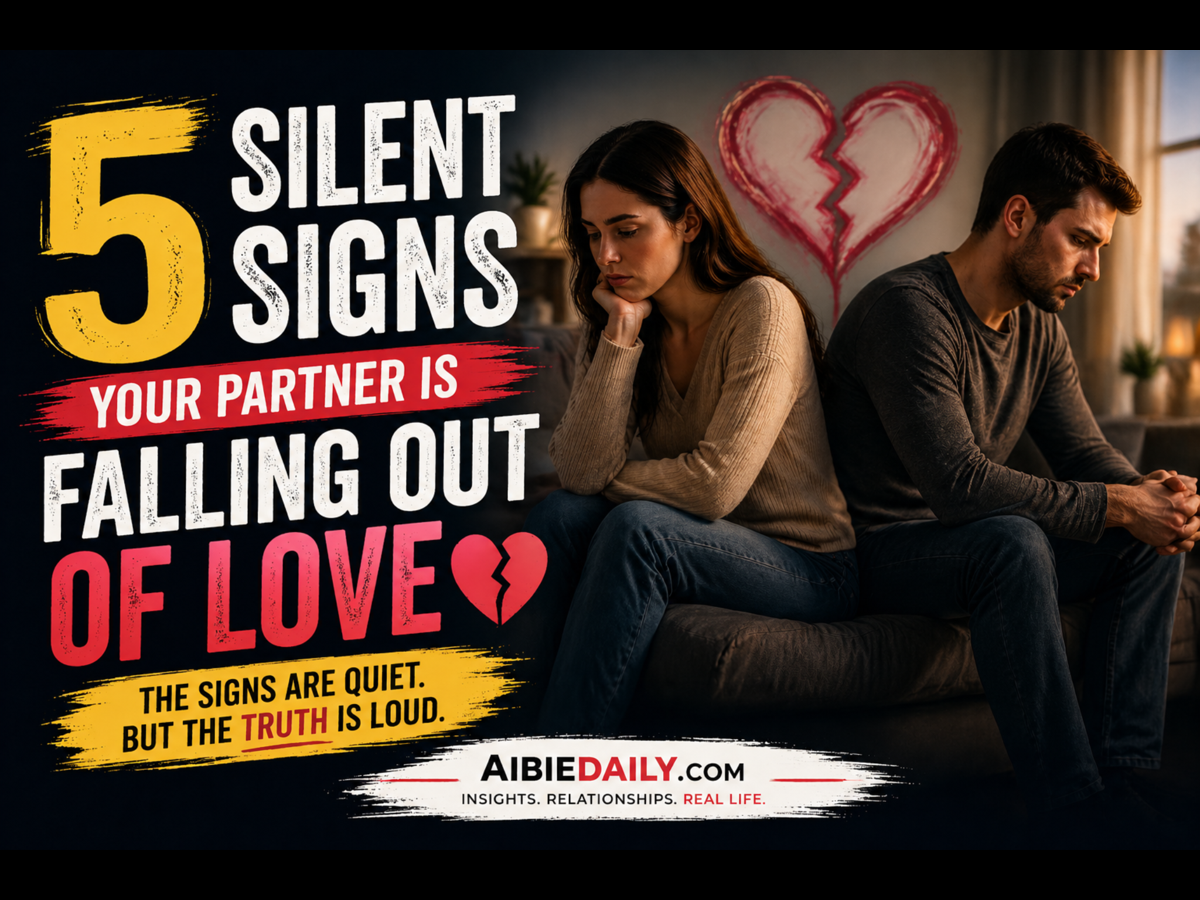
Love rarely disappears overnight. In most relationships, it fades quietly—gradually, subtly, and often without dramatic arguments or obvious betrayals. That’s why many people are caught off guard when a partner finally says, “I don’t feel the same anymore.” By the time those words are spoken, the emotional shift has usually been happening for weeks, months, or even years.
Understanding the silent signs your partner is falling out of love is important not so you can panic or overanalyze every small change, but so you can become more aware, more emotionally intelligent, and better equipped to respond thoughtfully rather than react impulsively. Love is not just a feeling—it’s also reflected in behavior, effort, attention, and emotional presence. When those begin to change consistently, it often signals something deeper.
Below are five major silent signs, explained in depth from a psychological and practical perspective, with clear, relatable examples to help you recognize them in real life.
1. Emotional Distance Begins to Replace Emotional Intimacy
One of the earliest and most telling signs is emotional distance. This doesn’t always look like coldness or hostility. In fact, it’s often much quieter than that.
Emotional intimacy is the core of romantic connection. It involves sharing thoughts, feelings, vulnerabilities, and daily experiences. When someone starts falling out of love, their emotional investment often decreases. They begin to withdraw—not necessarily because they want to hurt you, but because they no longer feel the same depth of connection.
This creates a subtle but noticeable shift: Conversations become surface-level, Personal sharing reduces and Vulnerability disappears
Example:
At the beginning of your relationship, your partner might have told you everything—how their day went, what stressed them, what excited them, even random thoughts.
Now, when you ask:
“How was your day?”
You get:
“Fine.”
No details. No follow-up. No emotional engagement.
Another scenario:
You share something important about your day or feelings, and instead of engaging, your partner gives short responses like:
“Oh, okay.”
“That’s good.”
They’re physically present, but emotionally unavailable.
Why this matters:
Love thrives on emotional closeness. When that fades, the relationship begins to feel like two people coexisting rather than connecting.
2. Effort Becomes Inconsistent or Disappears Entirely
Love is not just a feeling—it’s demonstrated through consistent effort. When someone starts falling out of love, effort often becomes one of the first things to decline.
When we value something, we invest energy into it. Effort reflects priority. A decrease in effort often signals a decrease in emotional investment.
This can show up as: Less communication, less planning time together, less interest in resolving issues and reduced affection
Example:
Previously: They texted you regularly, Made plans to see you and Checked on you during the day
Now: You’re always the one initiating contact, Plans feel forced or last-minute and They seem “too busy” for you but not for everything else
Another scenario:
You bring up an issue in the relationship, and instead of working through it, they respond with:
“Can we not do this right now?”
“It’s not that serious.”
Why this matters:
Effort is one of the clearest behavioral indicators of love. When effort consistently declines, it often means the emotional drive behind it is fading.
3. Communication Becomes Functional, Not Emotional
Communication is the lifeline of any relationship. When love starts fading, communication often becomes transactional rather than meaningful. When talks becomes more of passing necessary information rather than emotional discussions with deep connection
When someone is emotionally disengaging, they may still communicate—but only out of necessity, not desire.
This creates a shift from:
- “I want to talk to you”
to - “I have to talk to you”
Example:
Instead of conversations like:
“I was thinking about you today…”
“I can’t wait to see you…”
You start hearing:
“Did you eat?”
“What time are you coming back?”
The conversation revolves around logistics, not connection.
Another scenario:
Silence becomes more common—and not the comfortable kind. It feels awkward, forced, or empty.
You may find yourself thinking:
“Why does it feel like we have nothing to talk about anymore?”
Why this matters:
When emotional communication fades, the relationship loses depth. It starts to feel like a routine rather than a bond.
4. Physical Affection and Intimacy Decline
Physical touch is a powerful expression of love. When someone is falling out of love, affection often decreases gradually. Physical affection like touching is an important indication of a healthy relationship however when this decrease and a partner began to avoid physical intimacy or instinctively resist being touched frequently is a sign of that your partner loses interest in the relationship.
Physical intimacy is closely tied to emotional connection. When emotional closeness weakens, physical closeness often follows.
This doesn’t just mean sex—it includes: Holding hands, Hugging, Sitting close and Casual touches
Example:
Before: They reached for your hand naturally, Hugged you without hesitation and Sat close to you
Now: Physical contact feels rare or forced, You’re always the one initiating and They pull away subtly
Another scenario:
Even when you’re together, there’s a noticeable lack of warmth. The connection feels distant, almost like something is missing.
Important note:
This sign should always be considered alongside others. Sometimes reduced affection can be caused by stress, health issues, or external pressures—not necessarily loss of love.
Why this matters:
Physical affection reinforces emotional bonds. When it consistently declines, it often reflects a deeper emotional shift.
5. You Feel It—Your Intuition Keeps Telling You Something Is Off
One of the most powerful yet overlooked signs is your intuition. Because you body is used to what is normal in the relationship so when something begins to feel different in most cases things are have changed.
Humans are highly perceptive. Even when we can’t logically explain it, we often pick up on subtle behavioral changes—tone, energy, attention, and presence.
If you constantly feel: Something is different, something is missing and something is off. There’s usually a reason.
Example:
You’re with your partner, everything seems “normal” on the surface, but internally you feel disconnected.
You might think:
“They’re here, but they’re not really here.”
Another scenario:
You start questioning things you never questioned before: “Do they still love me?” “Why do I feel alone in this relationship?”
Why this matters:
Intuition is often the result of subconscious pattern recognition. It notices small changes before your conscious mind fully processes them.
Putting It All Together
Each of these signs on its own does not automatically mean your partner is falling out of love. Life circumstances—stress, work pressure, personal struggles—can temporarily affect behavior. However, when multiple signs appear consistently over time, it often indicates a deeper emotional shift.
For example:
- Emotional distance + reduced effort + less affection
- Functional communication + intuition that something is wrong
These patterns together tell a stronger story than any single behavior.
What You Should Do (Instead of Panicking)
Recognizing these signs are important—but how you respond matters even more.
1. Don’t jump to conclusions: Avoid immediately assuming the worst. Observe patterns over time.
2. Communicate openly: Instead of accusing, express how you feel:
“I feel like we’ve been a bit distant lately. Is everything okay?”
3. Focus on clarity, not control: You cannot force someone to feel something—but you can seek understanding.
4. Pay attention to their response: Someone who still cares will engage, even if things are difficult. Someone who is emotionally checked out will avoid, deflect, or dismiss.
What you must know
Falling out of love is rarely loud. It doesn’t always come with dramatic fights or obvious endings. More often, it shows up in quiet ways:
- Less effort
- Less emotion
- Less presence
That’s why these silent signs matter—they help you see what words may not reveal. At the same time, awareness is not meant to make you anxious. It’s meant to make you emotionally intelligent and intentional. Relationships evolve, and sometimes they require effort from both sides to reconnect and rebuild.
But one truth remains clear:
Love is not just what someone says—it’s what they consistently show. When the actions, energy, and presence begin to change, it’s worth paying attention—not out of fear, but out of self-respect and a desire for genuine connection.
Share this content:













Post Comment