



Why Good People Attract Toxic Partners (And How to Stop It)
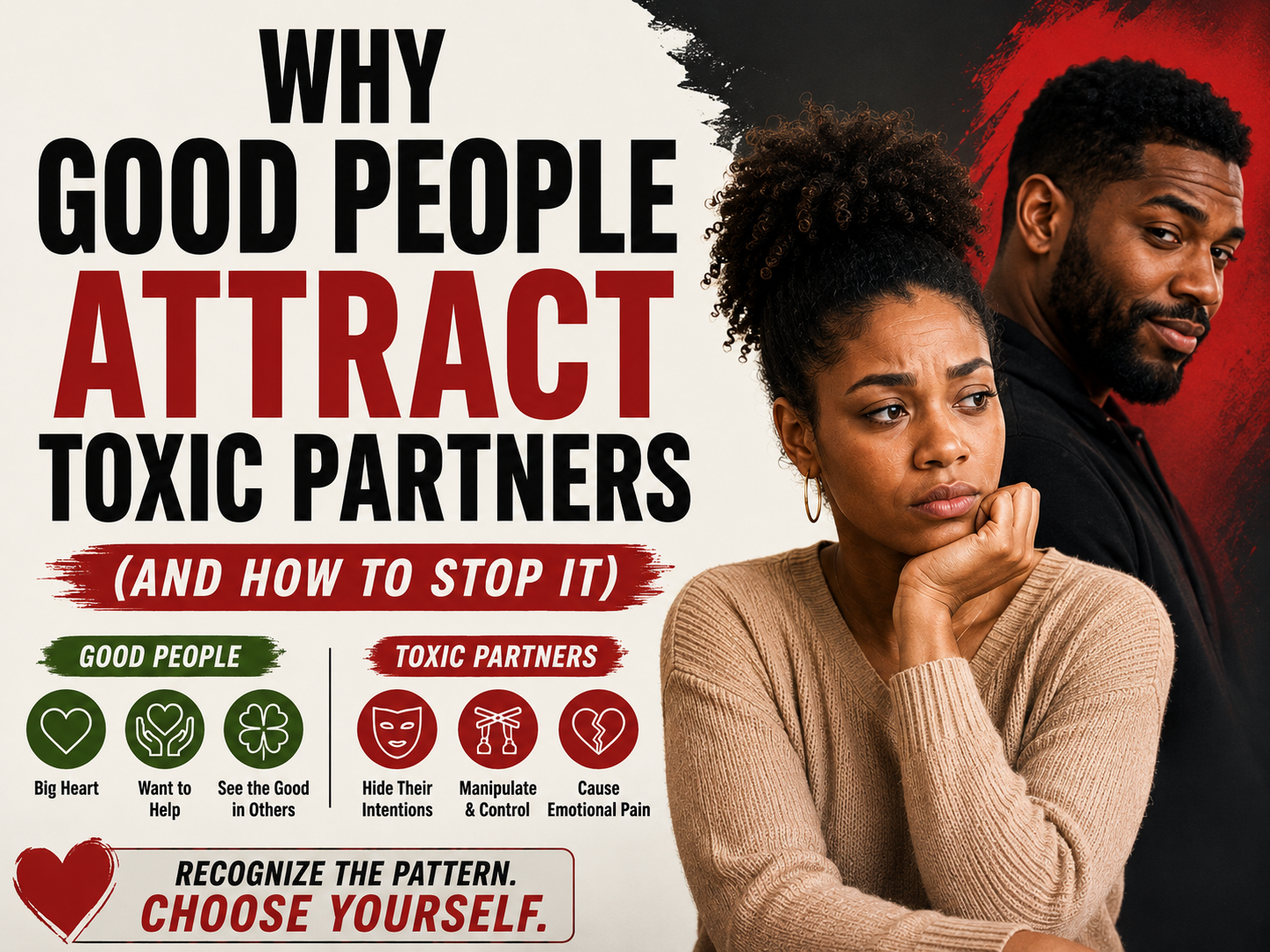
Many genuinely kind, caring, and emotionally supportive people often find themselves repeatedly attracting toxic partners. This can feel confusing because society usually assumes that being “good” naturally leads to healthy relationships. However, toxic individuals are often drawn to people who are empathetic, patient, forgiving, and emotionally available because those qualities make manipulation easier. In many cases, the problem is not that the good person lacks value, but that they lack strong boundaries, self-protection, or awareness of unhealthy relationship patterns.
Toxic relationships rarely begin with obvious warning signs. Many toxic partners appear charming, attentive, emotionally intense, or deeply vulnerable in the beginning. Over time, however, manipulation, emotional instability, control, dishonesty, or emotional exhaustion gradually emerge. Understanding why good people repeatedly attract these kinds of partners is important because awareness helps break destructive relationship cycles. Below are seven major reasons this pattern happens and practical ways to stop it.
1. They Ignore Red Flags Because They See Potential
Good-hearted people often focus on a person’s potential instead of their actual behavior. They may notice warning signs early—such as jealousy, dishonesty, emotional inconsistency, disrespect, or anger issues—but convince themselves that the person will eventually change. Their compassion makes them want to help, heal, or understand the toxic partner rather than protect themselves. Unfortunately, toxic individuals often exploit this optimism because they know the other person is willing to give endless chances.

For example, a woman may date a man who constantly apologizes after emotional outbursts. Each time he promises improvement, she chooses to believe his “good side” instead of paying attention to the repeated harmful behavior. Over time, the relationship becomes emotionally draining because she is attached to who he could become rather than who he consistently is. To stop this pattern, people must learn to judge relationships by repeated actions rather than emotional promises or future potential.
2. They Have Weak Personal Boundaries
Many good people struggle to say no, enforce limits, or walk away from unhealthy behavior. They fear appearing selfish, harsh, or unkind, so they tolerate disrespect longer than they should. Toxic partners quickly recognize when someone lacks strong boundaries because it creates opportunities for control, emotional manipulation, or exploitation. Without boundaries, unhealthy behavior gradually becomes normalized within the relationship.

For instance, a man may repeatedly cancel plans, disrespect his partner’s time, or emotionally manipulate her during disagreements. Instead of confronting the behavior firmly, she remains silent to avoid conflict. Over time, the toxic partner becomes increasingly careless because there are no meaningful consequences. Healthy boundaries involve clearly communicating what behavior is acceptable and being willing to distance yourself when those limits are violated repeatedly.
3. They Confuse Sudden Display of Emotions with Love
Toxic relationships often begin with extreme emotional intensity. There may be excessive attention, fast emotional attachment, dramatic affection, or overwhelming romantic gestures. Good people sometimes mistake this intensity for genuine love because it feels exciting, passionate, and emotionally consuming. However, emotional intensity is not the same as emotional stability or genuine compatibility.

For example, someone may meet a partner who constantly texts, wants immediate commitment, and becomes emotionally attached within days. At first, this may feel flattering and romantic. Later, however, the same intensity turns into possessiveness, jealousy, emotional control, or emotional instability. Healthy love usually develops gradually with trust, consistency, and emotional safety rather than emotional chaos. Learning to value stability over intensity helps people avoid toxic attachment patterns.
4. They Want to “Fix” or Rescue People
Many compassionate individuals are naturally drawn to emotionally wounded or troubled partners. They believe love, patience, and support can heal another person’s trauma, insecurity, addiction, or destructive behavior. While empathy is a positive quality, relationships become unhealthy when one partner constantly plays the role of therapist, rescuer, or emotional caretaker.

For example, a person may stay with a partner who lies, manipulates, or behaves irresponsibly because they believe the toxic behavior comes from childhood pain or emotional trauma. Instead of prioritizing their own emotional well-being, they become consumed with helping the other person improve. Over time, this creates emotional exhaustion and imbalance because healthy relationships require mutual effort, accountability, and emotional responsibility from both individuals.
5. Low Self-Worth Makes Them Accept Less Than They Deserve
Some good people secretly struggle with low self-esteem or feelings of unworthiness. Even if they appear confident externally, internally they may fear abandonment, rejection, or loneliness. Because of this, they tolerate unhealthy treatment longer than emotionally healthy individuals would. Toxic partners often target people who are willing to overcompensate for love, approval, or validation.

For example, a woman may remain in a relationship where she is constantly criticized, ignored, or emotionally manipulated because she fears she may not find another partner. Similarly, a man may stay with a controlling or disrespectful partner because he doubts his value outside the relationship. Building self-worth is essential because people with healthy self-esteem are more likely to leave situations that consistently damage their emotional well-being.
6. They Grew Up Around Unhealthy Relationship Patterns
Childhood experiences strongly influence adult relationships. People who grew up around emotional instability, manipulation, neglect, or conflict may unconsciously normalize toxic behavior. Even when they dislike unhealthy relationships consciously, toxic dynamics may still feel emotionally familiar or strangely comfortable because they mirror early life experiences.

For example, someone raised in a home where affection was inconsistent may become attracted to emotionally unavailable partners because unpredictability feels familiar. Another person who witnessed controlling relationships growing up may struggle to recognize possessiveness as unhealthy. Healing often requires self-awareness and consciously learning what healthy love actually looks like. Therapy, emotional education, and self-reflection can help people break inherited relationship patterns.
7. Toxic Partners Are Often Skilled Manipulators
Toxic individuals are not always openly cruel at the beginning. Many are highly charming, emotionally intelligent, persuasive, and socially skilled. They carefully study people’s emotional needs and present themselves as ideal partners initially. This process, sometimes called “love bombing,” creates emotional attachment before the toxic behavior gradually emerges.

For example, a toxic partner may initially appear deeply caring, attentive, supportive, and emotionally available. Once emotional attachment forms, however, manipulation, gaslighting, emotional withdrawal, guilt-tripping, or control slowly begins. By the time the good person notices the pattern, they may already feel emotionally attached or dependent. Recognizing manipulation tactics early is important because toxic relationships usually deteriorate gradually rather than immediately.
How to Stop Attracting Toxic Partners
Develop Strong Boundaries
One of the most important ways to avoid toxic relationships is learning to establish and enforce healthy boundaries. Boundaries protect emotional well-being by clearly defining what behavior is acceptable and unacceptable. This includes refusing disrespect, manipulation, dishonesty, emotional abuse, or repeated inconsistency. Healthy people respect boundaries, while toxic individuals often resist them.
For example, if someone repeatedly violates your trust, dismisses your feelings, or manipulates conversations, strong boundaries require addressing the issue directly instead of tolerating it silently. Boundaries are not about controlling others; they are about protecting your emotional health and creating standards for how you deserve to be treated.
Pay Attention to Consistent Behavior
Words can be persuasive, but consistent behavior reveals character more accurately. Toxic partners often make impressive promises, emotional apologies, or dramatic declarations of love. However, genuine change is reflected through consistent long-term actions rather than temporary emotional displays.
For instance, if someone repeatedly apologizes for disrespectful behavior but continues repeating the same actions, the apology loses meaning. Healthy relationships are built on trust, consistency, accountability, and emotional reliability. Learning to focus on behavioral patterns rather than emotional moments helps people make healthier relationship decisions.
Stop Romanticizing Potential
Many people become emotionally attached to who someone could become instead of who they currently are. This creates false hope and emotional dependency because the relationship revolves around imagined future change rather than present reality. Healthy relationships should not depend entirely on the expectation that one person will eventually transform.
For example, if a partner constantly lies, avoids responsibility, or behaves selfishly, it is dangerous to remain emotionally invested based solely on occasional moments of kindness or promises of improvement. Accepting reality instead of fantasy helps prevent emotional disappointment and repeated toxic cycles.
Build Self-Worth and Emotional Independence
People with strong self-worth are less likely to tolerate emotional mistreatment because they do not depend entirely on relationships for identity or validation. Emotional independence allows individuals to leave unhealthy situations without feeling emotionally destroyed or worthless.
Building self-worth may involve self-care, therapy, personal growth, supportive friendships, spiritual development, or achieving personal goals outside relationships. The healthier a person feels internally, the less attractive toxic relationships become because emotional stability no longer feels unfamiliar or boring.
Learn the Difference Between Healthy and Toxic Love
Healthy love feels emotionally safe, respectful, supportive, and consistent. Toxic love often feels emotionally confusing, unstable, exhausting, or anxiety-inducing. Many people mistake emotional highs and lows for passion when they are actually signs of dysfunction.
For example, constantly worrying about a partner’s mood, fearing abandonment, or walking on eggshells is not evidence of deep love—it is emotional instability. Healthy relationships allow both people to feel respected, secure, emotionally heard, and psychologically safe.
Finally
Good people often attract toxic partners not because they are weak or foolish, but because qualities like kindness, empathy, patience, and emotional openness can unfortunately make them vulnerable to manipulation. Toxic individuals are often drawn to people who are forgiving, nurturing, and willing to overlook harmful behavior in the hope of preserving love or helping someone change.
However, attracting toxic people does not mean someone must continue accepting toxic relationships. Through self-awareness, healthy boundaries, emotional healing, and stronger self-worth, people can break destructive relationship patterns and build healthier connections. The goal is not to become cold or emotionally closed off, but to balance kindness with wisdom, emotional intelligence, and self-protection.
Share this content:











Post Comment