








How to detect lies through Hand Movements
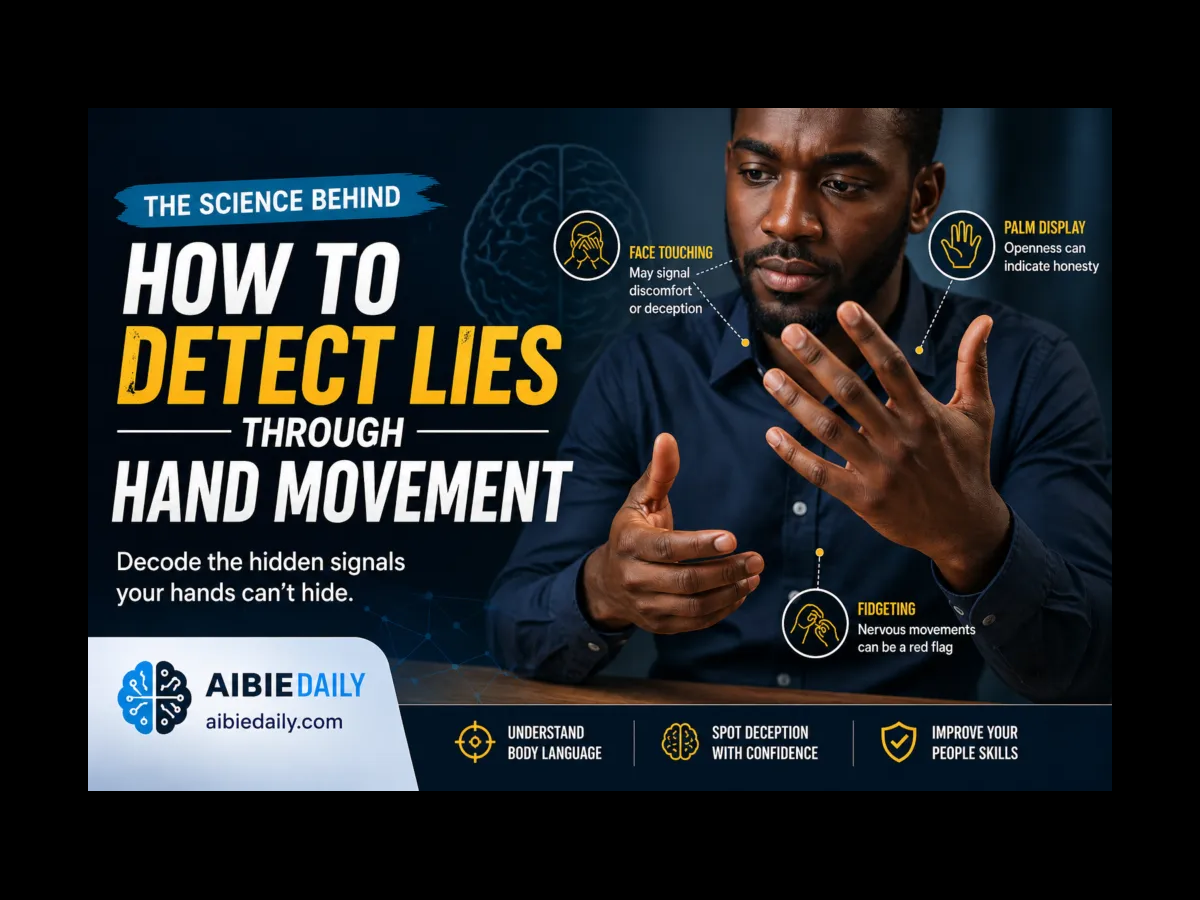
Hand movements are an important part of body language because they often reflect what is happening in a person’s mind. When people speak truthfully, their hand gestures usually flow naturally with their words. But when someone is lying, their brain is working harder—creating a story, controlling emotions, and monitoring your reaction. This mental effort can affect how their hands behave.
From a psychological standpoint, lying can create stress, anxiety, or cognitive load, and these internal states often “leak” through the hands in subtle ways.
1. Reduced Hand Gestures (Over-Control)
Reduced hand gestures, also known as over-control, happen when a person limits their natural hand movements during a conversation. Normally, people use their hands freely to explain ideas, emphasize points, and express emotions. However, when someone is trying to hide something or appear convincing, they may become overly careful and reduce these natural gestures. Their hands may stay still, close to their body, or even hidden, making their communication seem less expressive and slightly unnatural.

This behavior can occur because the person is consciously trying to control their body language to avoid giving away signs of nervousness or deception. By restricting movement, they believe they can appear calm and believable. However, this over-control can have the opposite effect, making them seem tense or rehearsed. It is important to note that reduced hand gestures alone do not prove someone is lying, as personality, cultural habits, or the seriousness of a situation can also influence how much a person uses their hands while speaking.
What it looks like: hands kept still or hidden, limited or unnatural gestures and arms kept close to the body
Example:
You ask someone: “Did you send the email?” They reply: “Yes, I did,” But their hands: Stay completely still, or remain hidden under the table or in pockets
Normally, people use their hands to support what they are saying. When gestures suddenly disappear, it may indicate the person is trying too hard to control their body language to avoid giving themselves away.
2. Excessive or Unnatural Gestures
Excessive or unnatural gestures occur when a person uses too many hand or body movements in a way that feels forced or out of sync with what they are saying. Instead of natural, smooth gestures that match their speech, their movements may appear exaggerated, repetitive, or poorly timed. For example, they might wave their hands too often, point unnecessarily, or make dramatic motions that don’t clearly connect to their message. This can make their behavior seem unusual or overly performative.

In situations involving possible deception, some people overcompensate by using more gestures to appear confident and convincing. They may believe that being expressive will make their story seem more believable, but the result can look unnatural or rehearsed. These gestures may not match their tone, facial expressions, or the seriousness of the topic. However, excessive movement alone does not prove someone is lying, because personality, excitement, or cultural communication styles can also lead to more expressive gestures.
What it looks like: overly dramatic hand movements, gestures that don’t match the message and movements that feel exaggerated
Example:
You ask: “Were you at home last night?” They respond with large, exaggerated hand gestures:
“Yes! Of course I was at home!” The intensity of the gestures may feel unnatural compared to the situation.
The person may be trying to convince you rather than simply answer. This overcompensation can make their gestures look forced.
3. Self-Touching and Comfort Gestures
Self-touching and comfort gestures are behaviors people often display when they feel nervous, stressed, or emotionally uncomfortable. These actions happen almost unconsciously and are meant to calm the body. Common examples include touching the face, rubbing the hands together, adjusting clothing repeatedly, scratching the neck, or playing with hair or objects like rings and pens. These movements can act as a form of self-soothing, helping the person manage internal tension without even realizing it.

In situations involving possible deception, these gestures may increase because the person is experiencing anxiety or fear of being exposed. For instance, someone might touch their face more frequently or fidget with their hands when answering difficult questions. However, it is important not to jump to conclusions, as self-touching can also be caused by harmless reasons such as habit, physical discomfort, or general nervousness in social situations.

What it looks like: touching the face, rubbing the hands together, scratching the neck and playing with fingers
Example:
You ask a direct question: “Did you take the money?” While answering, the person: rubs their hands repeatedly, touches their face and fidgets with their fingers
These movements can help reduce internal tension. Psychologically, the body is trying to calm itself during a stressful moment, which can occur when someone is being deceptive.
4. Covering or Blocking Gestures
Covering or blocking gestures occur when a person uses their hands or objects to hide parts of their body, especially the face or mouth. Common examples include placing a hand over the mouth while speaking, touching or rubbing the lips, covering part of the face, or even using items like a phone, glass, or notebook as a barrier. These actions can act as a form of psychological protection, as if the person is trying to block information, hide their reaction, or create distance between themselves and others.

In situations involving possible deception, covering gestures may increase because the person feels uneasy about what they are saying. For example, someone might briefly cover their mouth after making a statement, as if they are subconsciously trying to hold back or “hide” their words. However, it is important to interpret these signals carefully, because such gestures can also be linked to habits, shyness, surprise, or cultural behavior rather than dishonesty.

What it looks like: hand partially covering the mouth while speaking , touching lips frequently and placing objects (like a phone) between themselves and you
Example:
You ask: “Did you tell him what I said?” They respond: “No,” while briefly covering their mouth with their hand.
This can be a subconscious attempt to block or hide the truth, almost like the body is trying to stop the lie from coming out.
5. Fidgeting and Restless Hand Movements
Fidgeting and restless hand movements are common signs that a person may be feeling nervous, uneasy, or under pressure. Instead of keeping their hands relaxed, they may constantly move them by tapping fingers, rubbing their palms together, picking at their nails, or playing with objects like pens, phones, or clothing. These repeated movements often happen without conscious awareness and can make the person appear distracted or unsettled during a conversation.

In situations involving possible deception, increased hand activity may occur because the person is trying to manage internal stress or anxiety. The hands become an outlet for nervous energy, especially when answering difficult or sensitive questions. However, it is important not to assume dishonesty based on fidgeting alone, because such behavior can also result from habit, excitement, or general nervousness in social interactions.
What it looks like: tapping fingers, playing with objects (pen, phone, keys) and repeated hand movements without purpose
Example:
During a conversation, someone: keeps tapping their fingers rapidly, twists a ring or bracelet and constantly adjusts their hands
This restless behavior may indicate anxiety or discomfort, which can be linked to deception—especially if it appears suddenly during certain questions.
6. Timing of Hand Movements
Timing of hand movements refers to how well a person’s gestures match what they are saying. In natural communication, hand gestures usually occur at the same time as speech, helping to emphasize words and express meaning clearly. For example, when someone explains something, their hands move in a smooth and coordinated way with their voice. This synchronization makes the message feel genuine, relaxed, and easy to follow.
When the timing is off, it can signal discomfort or possible deception. A person may gesture too late, too early, or in a way that does not match their words, making their communication seem unnatural or rehearsed. For instance, they might make a hand movement after finishing a sentence instead of during it, or their gestures may not align with the emotion they are expressing. However, timing alone is not proof of lying, as nervousness, lack of confidence, or differences in communication style can also affect how gestures are used.
Example:
A person says: “I didn’t do it,” but their hand gesture comes after the words instead of at the same time.
In natural communication, gestures and speech are usually synchronized. When there is a delay, it may suggest the person is thinking too carefully about what to say, which can happen during lying.
Finally
Hand movements are a valuable clue in detecting possible deception because they often reflect subconscious emotional states. They can reveal nervousness, overcontrol, stress and discomfort
However, it’s important to remember no single hand movement proves someone is lying. To make a more accurate judgment look for changes in behavior , observe patterns, not isolated actions and combine hand movements with other cues like posture, facial expressions, and tone
In simple terms:
- Natural hand gestures = relaxed, consistent, and synchronized
- Suspicious hand gestures = forced, absent, exaggerated, or restless
By paying attention to these subtle signals, you can better understand what someone might truly be feeling—while avoiding the mistake of jumping to conclusions too quickly.
Share this content:














Post Comment