





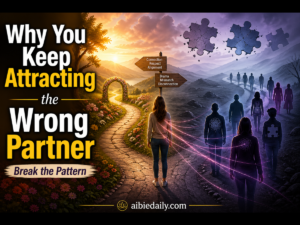
Why You Keep Attracting the Wrong Partner
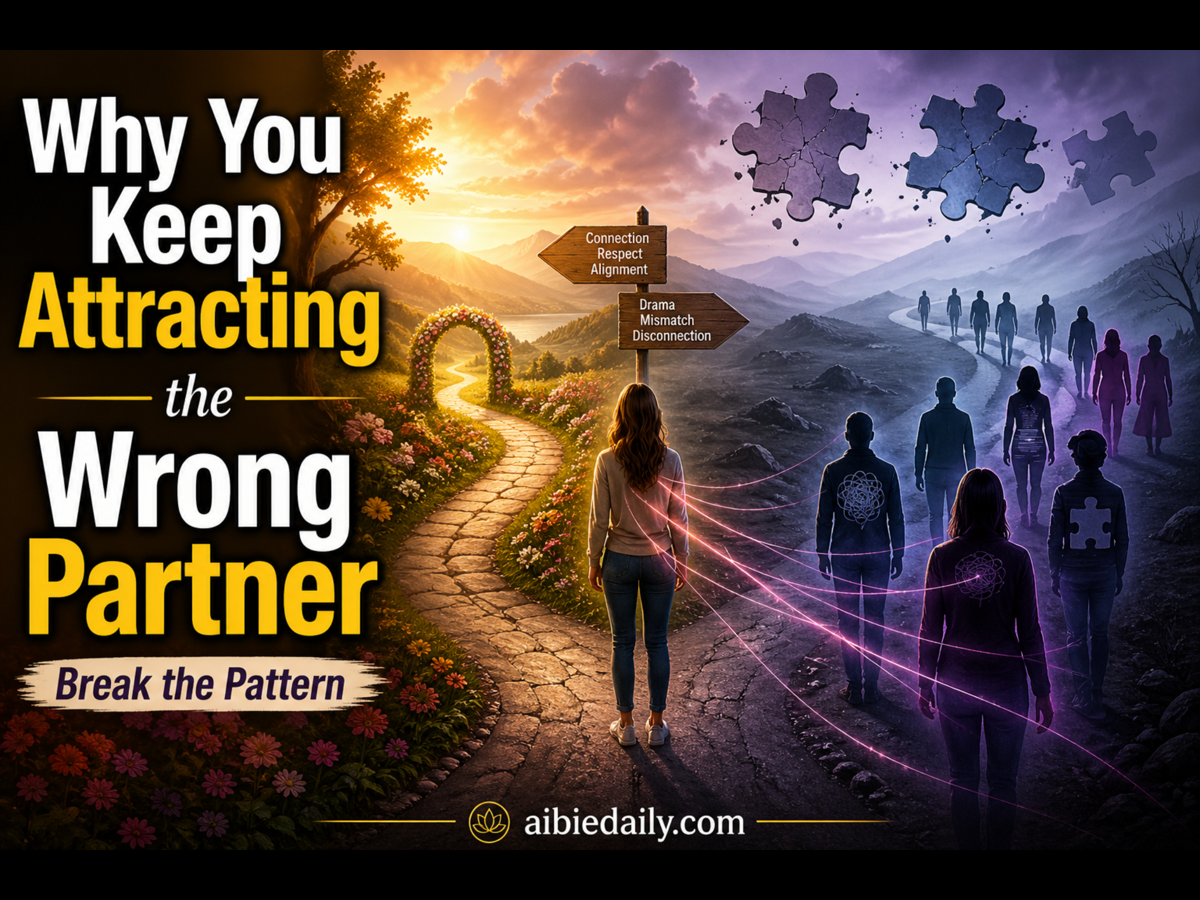
If you’ve ever found yourself asking, “Why do I keep ending up with the wrong person?”—you’re not alone. Many people experience repeated relationship patterns that leave them confused, frustrated, and emotionally drained. One relationship ends painfully, you promise yourself things will be different next time… yet somehow, the story repeats itself with a different face but the same outcome.
Here’s the uncomfortable truth: attracting the wrong partner is rarely just “bad luck.” More often, it’s the result of deeper psychological patterns, beliefs, and emotional habits that operate beneath your awareness. Until those patterns are understood and addressed, they tend to repeat themselves—no matter how much you want something different.
In this article, we’ll break down 5 powerful reasons why you keep attracting the wrong partner, explained in a simple, practical way with relatable examples you can connect with. Each point will help you not just understand why, but also what you can begin to change.
1. You Confuse Chemistry with Compatibility
One of the biggest reasons people repeatedly choose the wrong partners is because they mistake intense emotional chemistry for long-term compatibility.
Chemistry often feels like excitement, passion, butterflies, and a strong emotional pull. It can feel almost addictive—like you’ve found “the one” within a short period of time. However, psychology shows that this intense attraction is often driven by familiarity rather than suitability. In other words, you may feel drawn to someone not because they are right for you, but because they remind you (consciously or unconsciously) of emotional experiences you’ve had before.
For example, imagine someone who grew up with emotionally unavailable caregivers. They may feel a strong attraction to partners who are distant, inconsistent, or hard to read. Why? Because that emotional pattern feels familiar. When the partner finally shows a little affection, it feels rewarding—creating a cycle of emotional highs and lows that can be mistaken for “deep love.” In reality, it’s emotional conditioning at play.
The problem is that compatibility is built on values, communication, respect, and shared goals, not just emotional intensity. A partner who gives you peace, stability, and consistency may feel “boring” at first if you’re used to emotional rollercoasters. But that calmness is often what a healthy relationship actually looks like. Until you learn to separate chemistry from compatibility, you may keep choosing partners who feel exciting but ultimately hurt you.
2. You Have Unresolved Emotional Patterns from Your Past
Your past—especially your early emotional experiences—plays a powerful role in the kind of partners you attract and accept.
From a psychological perspective, humans tend to repeat familiar emotional experiences, even when they are unhealthy. This is known as repetition compulsion—a tendency to recreate unresolved emotional situations in an attempt to “fix” them. Unfortunately, instead of healing, it often leads to repeating the same painful outcomes.
For instance, if someone experienced neglect, rejection, or inconsistency growing up, they may subconsciously seek partners who recreate those feelings. Not because they enjoy pain, but because a part of them hopes that this time, the story will end differently. They may believe, “If I can make this person love me, it will prove I am worthy.”
Consider a person who keeps dating partners who cheat or lie. On the surface, it looks like bad luck. But on a deeper level, they may have unresolved trust issues or self-worth struggles that make them tolerate behaviors others would walk away from quickly. Their emotional “normal” has been shaped by past experiences.
Until these patterns are recognized and consciously addressed, they continue to influence your choices. Healing doesn’t mean blaming your past—it means understanding how it shaped your present so you can make better decisions moving forward.
3. You Ignore Red Flags Because You See Potential
Another major reason people attract the wrong partners is the habit of focusing on who someone could become, rather than who they actually are.
In the early stages of a relationship, it’s easy to overlook warning signs. You might notice behaviors like inconsistency, lack of communication, disrespect, or emotional unavailability—but instead of taking them seriously, you justify them. You tell yourself things like:
- “They’ll change with time”
- “They just need someone who understands them”
- “They’re not always like this”
This mindset is often driven by hope and emotional investment. You’re not falling in love with the person in front of you—you’re falling in love with the idea of who they might become. Unfortunately, relationships built on potential rather than reality often lead to disappointment.
For example, imagine dating someone who rarely makes time for you but occasionally shows affection. Instead of recognizing the inconsistency as a red flag, you focus on the moments when they are attentive. You convince yourself that those moments represent their “true self,” and the rest is temporary. Over time, you end up feeling neglected and unfulfilled.
Healthy relationships are based on consistent behavior, not occasional effort. When you learn to accept people as they are—not as you hope they will be—you become less likely to invest in partners who are fundamentally wrong for you.
4. Your Self-Worth Determines What You Tolerate
The way you see yourself directly affects the kind of relationships you accept.
If you struggle with low self-worth, you may unconsciously believe that you don’t deserve better. This belief doesn’t always appear as obvious insecurity—it can show up in subtle ways, such as tolerating poor treatment, overgiving in relationships, or staying longer than you should.
People with low self-worth often:
- Accept less than they deserve
- Fear being alone
- Overcompensate to earn love
- Ignore their own needs
For example, someone might stay in a relationship where their partner constantly disrespects them, fails to communicate, or shows little effort. Instead of leaving, they try harder—hoping to “fix” the relationship or prove their worth.
On the other hand, someone with a strong sense of self-worth is more likely to set boundaries and walk away from unhealthy situations. They don’t see love as something they have to earn by suffering.
The reality is simple but powerful:
You don’t attract what you want—you attract what you tolerate.
When you begin to value yourself more, your standards naturally rise. You stop accepting behavior that doesn’t align with your worth, and as a result, the kind of partners you attract and keep begins to change.
5. You Rush Into Relationships Without Truly Knowing the Person
In today’s fast-paced dating culture, many relationships move too quickly. Emotional connection, attraction, and excitement can create a sense of urgency—making you feel like you’ve found something special and don’t want to lose it.
However, rushing into a relationship often means you don’t give yourself enough time to observe patterns, behaviors, and character. In the early stages, most people present the best version of themselves. It takes time to see how someone:
- Handles conflict
- Treats others
- Communicates consistently
- Shows up during difficult moments
For example, you might meet someone who seems perfect in the first few weeks—attentive, charming, and affectionate. You quickly become emotionally invested, and before you know it, you’re deeply involved. But over time, inconsistencies start to appear: they become distant, unreliable, or emotionally unavailable.
Because you moved quickly, you didn’t allow enough time for their true behavior to reveal itself before becoming attached.
Taking things slowly doesn’t mean being cold or distant—it means being intentional. It allows you to evaluate whether someone is truly right for you, rather than getting carried away by initial emotions.
What You Must Know
Attracting the wrong partner is not a life sentence—it’s a pattern, and patterns can be changed. When you step back and reflect, you’ll often find that the issue isn’t just the people you meet, but:
- The traits you’re drawn to
- The behaviors you tolerate
- The emotional patterns you repeat
The moment you become aware of these patterns, you gain the power to break them.
Start by:
- Choosing compatibility over chemistry
- Healing unresolved emotional wounds
- Taking red flags seriously
- Building your self-worth
- Slowing down and observing behavior
The goal isn’t to become perfect—it’s to become aware and intentional. Because ultimately, the kind of relationship you experience is not just about who you meet—it’s about who you are when you meet them. And when you grow, your choices change. When your choices change, your relationships do too.
Share this content:










Post Comment