


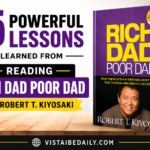
15 Powerful Lessons I Learned from Reading Rich Dad Poor Dad by Robert T. Kiyosaki
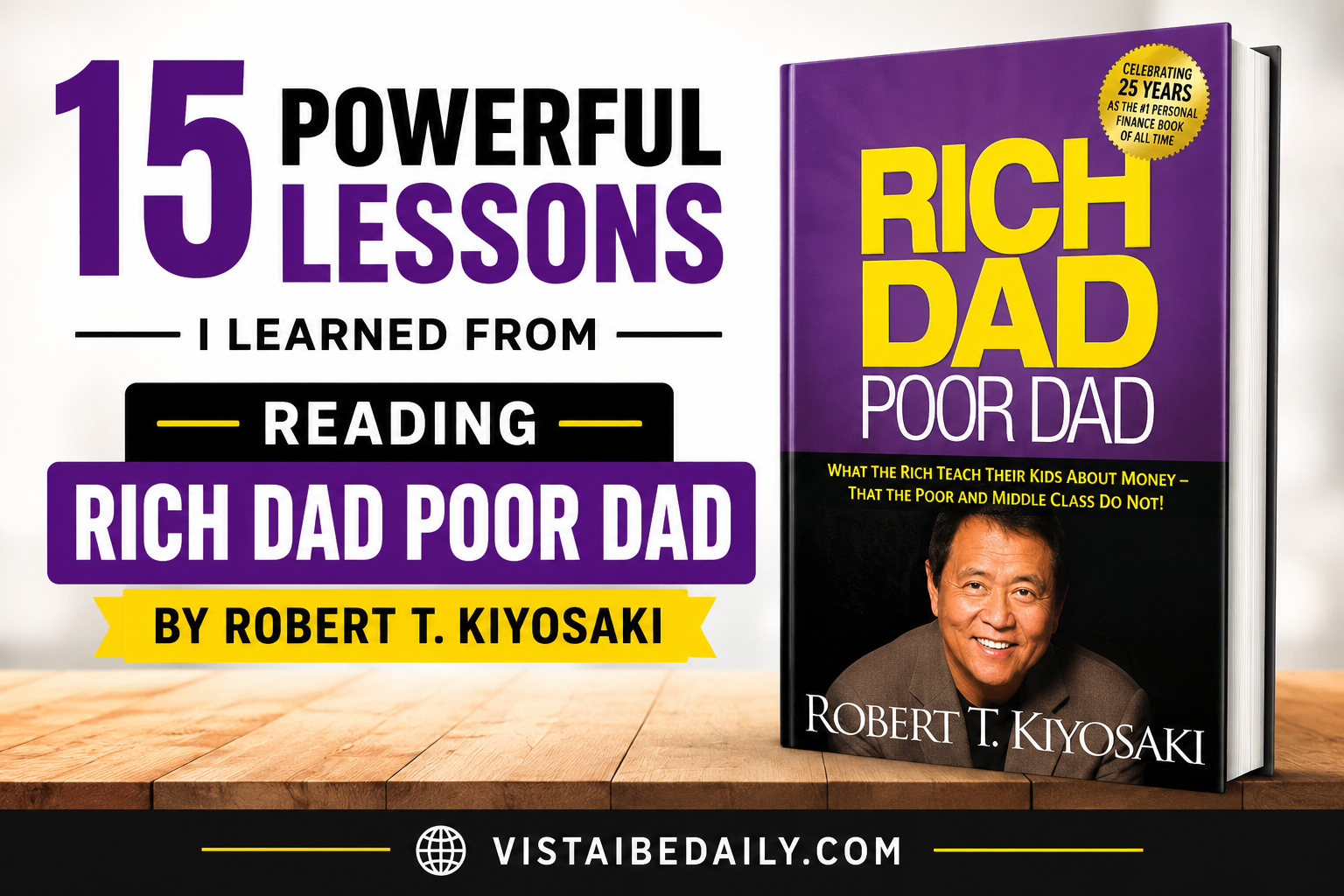
I have read many books on personal development and finance, but Rich Dad Poor Dad by Robert T. Kiyosaki is one of the few that genuinely changed the way I think about money. Before reading it, I believed that the best path to financial success was to study hard, get a good job, earn a higher salary, and work until retirement. However, this book challenged many of those beliefs and introduced me to a completely different way of looking at wealth, investing, and financial independence. It made me realize that earning more money is not always the solution to financial problems. Instead, understanding how money works and making wise financial decisions are what truly make the difference.
What I enjoyed most about the book is that it does not rely on complicated financial terms or difficult theories. Instead, the author uses simple stories and practical examples to explain lessons that anyone can understand and apply in everyday life. As I read each chapter, I found myself reflecting on my own financial habits and realizing that many of the mistakes people make with money come from a lack of financial education rather than a lack of income.
The lessons in this book go far beyond saving and investing. They encourage readers to think differently, take responsibility for their financial future, overcome fear, and build assets that create long-term wealth. Every chapter offered a practical insight that challenged my mindset and inspired me to make better financial decisions. In this article, I have shared 15 powerful lessons I personally learned from reading Rich Dad Poor Dad. My hope is that these lessons will help you see money from a fresh perspective and inspire you to take meaningful steps toward achieving financial freedom.
1. Financial Education Is More Important Than a High Income
One of the greatest lessons I learned from reading Rich Dad Poor Dad is that earning a high income alone does not guarantee financial success. Many people spend years pursuing better-paying jobs, believing that a larger salary will solve all their financial problems. However, the book explains that without financial education, even people with impressive incomes can struggle with debt, poor spending habits, and financial stress. The author shows that understanding how money works is far more important than simply earning more of it. Learning how to budget, save, invest wisely, manage debt, and recognize profitable opportunities allows a person to build lasting wealth. This lesson completely changed my perspective because I realized that financial freedom comes from making smart financial decisions rather than relying solely on a monthly paycheck. It also reminded me that investing in financial knowledge is one of the most valuable investments anyone can make because it provides benefits that can last a lifetime.
2. Make Money Work for You Instead of Working for Money
One of the most powerful lessons I learned from this book is that wealthy people focus on making money work for them instead of spending their entire lives working for money. Most people depend on their jobs as their only source of income, which means they must continue working to earn money. The author encourages readers to think differently by building assets that generate income even when they are not actively working. These assets may include businesses, investments, real estate, or other income-producing opportunities. This lesson helped me understand that financial freedom is achieved when money begins to generate more money without requiring constant personal effort. Instead of depending entirely on a salary, I learned the importance of creating multiple streams of income that can provide financial security over the long term. This shift in thinking inspired me to focus more on building assets rather than simply increasing my earnings from employment.
3. Fear and Greed Control Most People’s Financial Decisions
Another important lesson I learned is that emotions often have a greater influence on financial decisions than logic. The author explains that fear and greed are two powerful emotions that keep many people trapped in financial difficulties. Fear causes people to accept jobs they dislike simply because they are afraid of losing income or facing financial uncertainty. At the same time, greed encourages people to spend beyond their means in pursuit of a more comfortable lifestyle or expensive possessions. As income increases, spending often increases as well, creating a never-ending cycle of earning and spending. The book taught me that financial success requires learning to recognize these emotions and prevent them from controlling my decisions. Instead of reacting emotionally, I should carefully evaluate financial opportunities, control unnecessary desires, and make decisions based on long-term benefits rather than short-term satisfaction. This lesson showed me that mastering my emotions is just as important as mastering money itself.
4. Assets Build Wealth While Liabilities Consume It
One of the clearest lessons I learned from this book is the importance of understanding the difference between assets and liabilities. The author explains that wealthy people become rich because they consistently acquire assets that generate income, while many others spend their money on liabilities that continually take money out of their pockets. An asset is something that produces income or increases in value over time, whereas a liability creates ongoing expenses and reduces financial stability. This simple distinction completely changed the way I think about spending and investing. Before making any major financial decision, I now understand the importance of asking whether the purchase will increase my wealth or create additional financial burdens. The book taught me that building wealth is not about buying expensive possessions to impress others but about acquiring valuable assets that produce income and strengthen my financial future. This lesson provides a practical foundation for achieving long-term financial independence.
5. Never Stop Learning About Money
One of the most inspiring lessons I learned from reading this book is that financial education should never end. The author explains that money is constantly changing because economies, businesses, investment opportunities, and financial markets continue to evolve. People who stop learning often struggle to adapt to these changes, while those who continue improving their financial knowledge are better prepared to recognize opportunities and avoid costly mistakes. This lesson reminded me that graduating from school does not mean my education is complete. Instead, I should continue reading books, learning about investing, studying successful financial strategies, and improving my understanding of personal finance throughout my life. The book made me realize that financial success is not determined by how much education someone has in general, but by how committed they are to continually learning about money. Lifelong learning allows a person to make wiser financial decisions and build lasting wealth regardless of changes in the economy.
6. Opportunities Often Come Disguised as Problems
One of the most inspiring lessons I learned from Rich Dad Poor Dad is that many of life’s greatest opportunities are hidden inside problems and difficult situations. Most people see challenges as obstacles and immediately complain or give up, but successful people train themselves to look for the opportunities that exist within those challenges. The author demonstrates this through practical experiences, showing that every setback has the potential to become a valuable lesson if approached with the right mindset. Instead of avoiding difficulties, I learned that I should ask myself what I can learn from them and how I can turn them into an advantage. This lesson changed my perspective because I now understand that many successful businesses, investments, and innovations were created by people who identified opportunities where others saw only problems. Rather than fearing challenges, I should view them as chances to grow, improve my skills, and discover new paths to success.
7. Learn by Doing, Not Just by Listening
Another powerful lesson I learned from this book is that true knowledge comes from experience rather than simply listening to lectures or reading books. Rich Dad did not teach Robert about money by giving long classroom lessons. Instead, he created practical situations that forced him to think, solve problems, and experience the realities of money firsthand. Through working for very little pay, facing frustration, and observing how businesses operate, Robert gained lessons that no classroom could fully provide. This taught me that while theoretical knowledge is important, practical experience helps us understand concepts much more deeply. Whether learning about business, investing, or personal finance, taking action and applying what I have learned is the key to real growth. I now realize that mistakes, challenges, and real-life experiences are often the greatest teachers because they provide lessons that remain with us for a lifetime.
8. Change Yourself Before Blaming Others
One lesson that had a profound impact on me is that lasting improvement begins by changing myself rather than blaming other people for my problems. Throughout the book, Rich Dad encourages Robert to stop focusing on external circumstances and instead examine his own attitudes, decisions, and financial habits. It is easy to blame employers, the economy, or other people when things go wrong, but doing so prevents personal growth because it shifts responsibility away from ourselves. The author teaches that real success comes when we accept responsibility for our lives and focus on improving our knowledge, skills, and mindset. This lesson reminded me that I cannot control everything that happens around me, but I can control how I respond. By changing my own thinking and actions, I place myself in a much stronger position to solve problems, seize opportunities, and achieve long-term success.
9. Job Security Alone Does Not Create Financial Freedom
One of the most eye-opening lessons I learned from this book is that having a secure job does not necessarily lead to financial freedom. Many people believe that working for a stable company, earning regular promotions, and receiving a monthly salary are enough to guarantee long-term financial security. However, the author argues that depending entirely on one source of income leaves people financially vulnerable if circumstances change. Rich Dad explains that true financial freedom comes from building assets and creating multiple streams of income that continue generating money even when we are not actively working. This lesson completely changed my understanding of financial success because I realized that a job should be viewed as a starting point rather than the final destination. Building investments, businesses, or other income-producing assets provides greater financial stability and independence than relying solely on employment.
10. Think Before Reacting to Financial Problems
Another valuable lesson I learned from Rich Dad Poor Dad is that emotional reactions often lead to poor financial decisions. When people face money problems, they frequently respond with fear, panic, or frustration instead of carefully analyzing the situation. The author encourages readers to pause, think logically, and make thoughtful decisions rather than allowing emotions to take control. He explains that fear of losing money and the desire for immediate comfort often cause people to make choices that create even bigger financial problems later. This lesson taught me the importance of remaining calm whenever I face financial challenges. Instead of making quick decisions based on emotion, I should carefully evaluate my options, consider the long-term consequences, and choose the solution that best supports my financial goals. Developing the habit of thinking before reacting is one of the most valuable skills for building lasting financial success.
11. Taking Calculated Risks Creates Greater Opportunities
One of the most valuable lessons I learned from Rich Dad Poor Dad is that avoiding every risk limits both personal and financial growth. Many people are afraid of failure, so they choose the safest path, even when it offers little opportunity for improvement. The author explains that successful people do not take reckless risks, but they carefully study opportunities, evaluate the possible outcomes, and then make informed decisions. This lesson taught me that every worthwhile achievement involves some level of uncertainty, and avoiding all risks often means missing valuable opportunities. Whether starting a business, investing, or learning a new skill, calculated risk-taking is often necessary for long-term success. I also learned that failure should not always be viewed as a setback but as an opportunity to gain experience and become wiser. By developing the courage to make informed decisions instead of allowing fear to control me, I can create opportunities that would never exist if I remained in my comfort zone.
12. Your Mind Is Your Greatest Financial Asset
One of the most inspiring lessons I learned from this book is that my greatest financial asset is not the amount of money I own but the knowledge and skills I develop. The author repeatedly emphasizes that a creative and educated mind can recognize opportunities that others fail to see. Even if someone loses money, a well-trained mind can generate new ideas, solve problems, and create wealth again. This lesson reminded me that investing in my education, improving my financial knowledge, and developing problem-solving skills are far more valuable than simply accumulating possessions. The book also taught me that opportunities often come to those who are prepared to recognize them. By continually learning, reading, asking questions, and improving my thinking, I increase my ability to make better financial decisions. I now understand that knowledge is an asset that cannot easily be taken away and can continue producing value throughout my life.
13. Hard Work Alone Does Not Guarantee Wealth
Another important lesson I learned from Rich Dad Poor Dad is that working hard alone is not enough to become financially successful. Many people believe that putting in longer hours or taking on additional jobs will automatically make them wealthy. However, the author explains that without financial intelligence, increased income often leads to increased spending rather than greater wealth. People may earn more money but continue struggling because they do not know how to manage, save, or invest it wisely. This lesson completely changed the way I think about success. I realized that while hard work is important, it must be combined with smart financial planning, disciplined spending, and wise investing. Building wealth requires making informed financial decisions that allow money to grow over time rather than simply working harder for every additional dollar earned. This understanding has encouraged me to focus on improving both my work ethic and my financial knowledge.
14. Successful People Think Differently About Money
One of the biggest lessons I learned from reading this book is that financial success begins with changing the way we think about money. The author demonstrates that wealthy people often approach financial situations differently from those who struggle financially. Instead of focusing on obstacles or saying something is impossible, they ask questions such as, “How can I make this happen?” or “What opportunity exists here?” This positive and solution-oriented mindset allows them to discover possibilities that others overlook. The book taught me that my thoughts influence my financial decisions, and my financial decisions shape my future. Developing the habit of thinking creatively, remaining open to new opportunities, and viewing problems as learning experiences can lead to greater financial success. I now understand that building wealth starts in the mind before it appears in a bank account, making the right mindset one of the most valuable assets anyone can develop.
15. Financial Freedom Is a Choice Built on Daily Decisions
Perhaps the greatest lesson I learned from Rich Dad Poor Dad is that financial freedom is not achieved overnight but is built through consistent daily decisions. Every financial choice, whether it involves saving money, avoiding unnecessary expenses, investing wisely, or continuing to learn, contributes to future financial success. The author explains that wealth is the result of discipline, patience, and making smart decisions over a long period rather than relying on luck or sudden opportunities. This lesson taught me that even small financial habits can have a significant impact over time. Choosing to save instead of overspending, investing instead of consuming, and continuously improving my financial knowledge are decisions that gradually build long-term security and independence. I now realize that financial freedom is not reserved for a fortunate few but is available to anyone who is willing to make wise financial choices consistently and remain committed to long-term goals.
Share this content:

Related Posts













Post Comment