








How to Detect Lies Through Statement Analysis
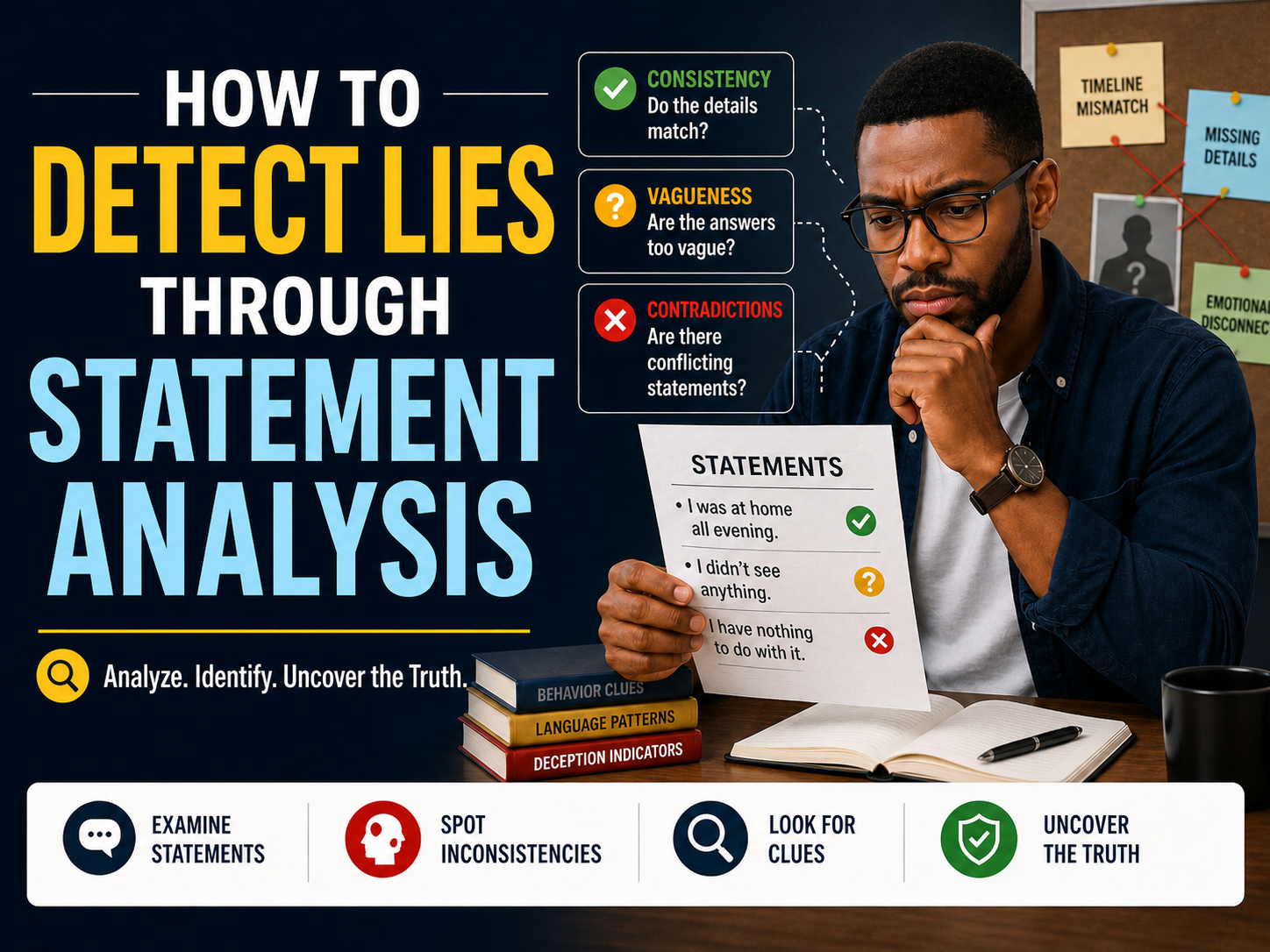
Statement analysis is a highly effective method for detecting lies, whether in verbal or written form. It’s one of the most accurate ways to assess truthfulness, helping you determine if someone is lying based on the words they use. People can’t hide the truth for long—every word and phrase they use can betray them, revealing whether they’re being honest or not.
In this post, we’ll explore what statement analysis is, how it works, and how to use it to spot deception. By the end, you’ll have the tools to start detecting lies and uncovering hidden truths.
Statement analysis is a technique used to analyze the language of a person’s statement—whether it’s spoken or written—to determine whether they are being truthful or deceptive. By paying close attention to word choice, sentence structure, and phrasing, you can uncover subtle clues that indicate dishonesty.
The core principle behind statement analysis is simple: people often reveal more than they intend to when they speak. Even when someone is trying to hide the truth, their language choices will often expose their real intentions. The following are way through which you can detect lies and deception using statement analysis.
1. Listen Carefully to Word Choice (Word Choice and Phrasing)
Pay attention to the words the speaker uses. Are they distancing themselves from certain people or events? Are they using vague language or passive voice to avoid responsibility? These can be signs that the speaker is not being truthful.

Word choice and phrasing can reveal a lot when trying to detect possible deception. When people are telling the truth, they usually speak in a natural, direct, and simple way because they are describing real experiences. However, when someone is lying, they may carefully choose their words to avoid being caught. This can lead to unusual phrasing, over-explaining, or using vague language. For example, instead of saying “I didn’t take the money,” a person might say, “I would never do something like that,” which avoids giving a direct answer.
Another common sign is when people distance themselves from what they are saying. They might avoid using personal words like “I” or “me,” or they may repeat certain phrases to sound convincing. For instance, someone might say, “To be honest” or “Believe me” too often, which can sometimes signal they are trying too hard to be believed. However, it is important to remember that word choice alone is not proof of lying. People speak differently depending on their personality, mood, or situation. That is why this sign should always be considered together with tone of voice, body language, and consistency in their story.
Example 1: Creating Distance with Language
Consider a man who is accused of cheating on his wife. When asked about it, he replies, “I had nothing to do with that woman.”
At first, this might seem like a straightforward denial, but take a closer look at the phrasing: “that woman.” By using the phrase “that woman,” the speaker is distancing himself from the woman involved. He could have easily referred to her by name, or even by a more neutral term like “the woman,” but he chose “that woman,” which implies a lack of personal connection. This subtle choice suggests that he may be hiding something.
Example 2: The Word “Try” (Signify an incomplete effort)
Another common clue in statement analysis is the use of the word “try.” When someone says, “I try to love you” or “I am trying to tell the truth,” the word “try” signals a failed or incomplete attempt.
In an honest statement, the person would simply say, “I love you” or “I am telling the truth.” The use of “try” implies that the speaker’s effort has not been fully realized or may be insincere. It softens the message, allowing them to avoid a direct, definitive statement.
2. Look out for Statements that Lack of Details or is Vague
Lack of detail or vagueness is one of the common signs people look for when trying to detect possible lies. When someone is telling the truth, they usually speak more freely and include specific details because they are describing something they actually experienced. These details can include things like where they were, who they were with, what time something happened, or even how they felt at that moment. On the other hand, when a person is lying, they may intentionally keep their story simple and unclear. This is often because they are trying to avoid saying something that could expose the lie or lead to more questions they cannot answer.

For example, if you ask someone what they did last night and they say, “Nothing much, just stayed around,” without giving any clear details, it might seem suspicious. A truthful person is more likely to say something like, “I got home around 7 pm, watched a football match, and later called my friend before going to bed.” Another example is when someone keeps saying, “I don’t remember,” even for recent events that should be easy to recall. While forgetting can be normal, repeated vagueness can raise questions. However, it’s important to remember that this sign alone does not prove someone is lying. People may be tired, distracted, or simply not good at explaining things. That’s why it’s best to look at this behavior together with other signs like tone of voice, body language, and consistency in their story.
3. Look closely When Passive Voice is used
The use of passive voice can be a subtle sign of possible deception because it removes the speaker from direct responsibility. Instead of clearly saying who did something, the sentence becomes less personal and more vague. For example, someone might say, “The money was taken,” instead of “I took the money.” This kind of wording creates distance between the person and the action, making it harder to point blame. People sometimes do this when they feel guilty or want to avoid consequences, so they shift the focus away from themselves without openly denying what happened.

In everyday situations, this can appear in simple conversations. Imagine a student telling a teacher, “The homework was not done,” instead of admitting, “I didn’t do my homework.” In a workplace, an employee might say, “The mistake was made during the process,” rather than saying, “I made a mistake.” While passive voice is not always a sign of lying, it becomes more suspicious when it is used in situations where the speaker should naturally take responsibility. When you notice this pattern along with other signs like hesitation or a nervous tone, it may suggest the person is trying to hide the truth or avoid being held accountable.
4. Look for Inconsistencies in the Statement
Looking for inconsistencies is one of the most reliable ways to detect possible dishonesty. When a person is telling the truth, their story usually remains stable even when they repeat it later. However, someone who is lying often struggles to keep track of the details they have created. As a result, small parts of their story may change over time. For example, a person might first say they arrived at work at 8:00 a.m., but later claim it was 9:00 a.m. These differences may seem minor, but they can be important clues that the story is not fully accurate.

In real-life situations, inconsistencies can appear in both personal and professional settings. For instance, if an employee is questioned about missing company funds and gives different explanations each time—such as blaming a system error first and later saying a colleague was responsible—it raises suspicion. Similarly, a child who says they were playing outside but later claims they were watching TV may not be telling the truth. While memory mistakes can happen, repeated or major inconsistencies, especially when combined with nervous behavior or unclear answers, can suggest that the person is being dishonest and trying to cover up the truth.
One of the major trick used by investigators is asking a suspect to tell them what happened several times, suspicion becomes higher if each time he tells the story he changes somethings, remember somethings or add somethings. This is easily analyzed if the investigation is recorded.
5. Check for Over-Explaining
Checking for over-explaining is a useful way to spot possible dishonesty because people who are lying often feel the need to “prove” their story. Instead of giving a simple, direct answer, they add too many details that are not necessary. This can make the story sound forced or unnatural. For example, if you ask someone, “Did you take the file?” a truthful person might simply say “No.” But someone who is lying might respond with a long explanation like, “No, I didn’t take it, I was in the office all day, I even spoke to John, then I went to get coffee…” The extra details are often used to distract and make the story sound more believable.

In real-life situations, over-explaining can be a red flag, especially in professional settings. For instance, an employee asked why they missed a deadline might go into unnecessary detail about traffic, phone calls, and unrelated tasks instead of clearly stating the reason. Similarly, in customer service, a person might give a long, complicated story to justify a mistake instead of admitting it directly. While some people naturally talk more than others, over-explaining becomes suspicious when the added details don’t directly answer the question. When combined with other signs like inconsistent stories or nervous tone, it may suggest the person is trying to hide the truth.
6. Watch Out for Mismatch Between Words and Emotions
Watching out for mismatch between words and emotions means paying attention to whether a person’s feelings match what they are saying. When people tell the truth, their emotions usually align naturally with the situation. But when someone is lying, there can be a mismatch because they are focusing more on controlling their words than expressing genuine feelings. For example, if someone is describing a serious problem—like losing money or getting into trouble—but they are smiling or laughing, it may feel off. Similarly, a person who should normally sound worried or upset might speak in an unusually calm or flat tone, which can raise suspicion.

In real-life situations, this can be seen in both personal and professional settings. For instance, an employee explaining a major mistake at work might appear strangely relaxed instead of concerned about the consequences. In another case, a person accused of doing something wrong might show exaggerated emotions, like being overly dramatic or angry, to convince others of their innocence. While emotional differences can sometimes be due to personality or stress, consistent mismatches between words and feelings—especially when combined with other signs like inconsistent stories or over-explaining—can suggest that the person may not be telling the truth.
Finally
Statement analysis is a highly effective tool for detecting deception in both verbal and written statements. By paying attention to word choice, phrasing, and inconsistencies in detail, you can often uncover the truth behind someone’s words. Whether you’re analyzing a conversation with a friend, a job interview, or even a legal testimony, the principles of statement analysis can help you spot lies and identify hidden truths.
Remember, no single element should be relied on in isolation. Instead, look for patterns and multiple indicators to assess the credibility of a statement. By practicing statement analysis, you’ll become more adept at recognizing deceit and making more informed decisions.
Share this content:














Post Comment