








How to Detect Lies Through Eye Movement
Have you ever been talking to someone and suddenly noticed their eyes dart upward, sideways, or down toward the floor — and immediately thought, “Wait… are they lying to me?” You’re definitely not alone. For years, people have been fascinated by the idea that the eyes might secretly expose what the mouth is trying to hide. Movies, crime shows, relationship advice videos, and even some body language experts have popularized the belief that certain eye movements can reveal whether someone is telling the truth or making things up on the spot.
You’ve probably heard popular claims like:
- “If they look up to the right, they’re lying.”
- “If they look left, they’re remembering something real.”
- “If they avoid eye contact, they must be hiding something.”
Sounds convincing, right? After all, the eyes move automatically, so many people assume they’re impossible to control. The theory is that when people lie, the brain works differently, and those mental processes supposedly show up through eye direction and facial behavior. In simple terms, some believe the eyes act like tiny windows into the brain’s secret activity.
This idea became extremely popular in body language studies, interrogation techniques, and everyday conversations. Detectives used it. Employers believed it. Friends used it during arguments. And let’s be honest — many people still quietly use eye movement “analysis” while listening to suspicious stories from partners, coworkers, or politicians.
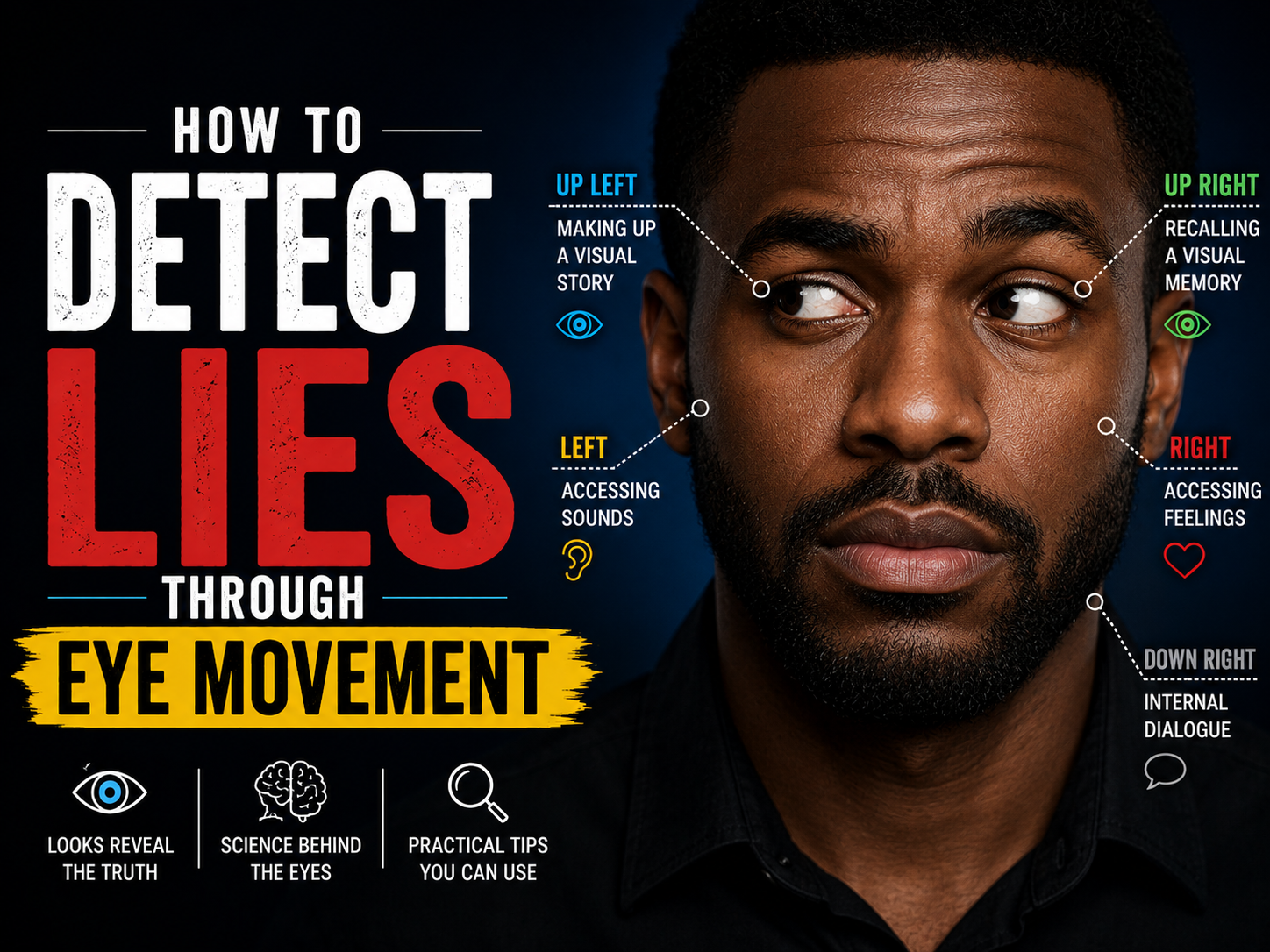
1. Looking up to the left may indicate visual memory recall (Truth)
When people look upward to the left while thinking or answering a question, some body language experts believe it may suggest the person is trying to remember a visual memory. In other words, the brain may be attempting to retrieve an image, scene, or event that the person has seen before. This eye movement is often associated with recalling past experiences, familiar faces, locations, or objects. However, it is important to remember that eye movements alone are not reliable proof of truthfulness or deception because different people process information differently.

For example, imagine asking someone, “What color was the first car you drove?” Before answering, the person briefly looks upward to the left as if mentally searching through memories. They may be trying to picture the actual vehicle in their mind before responding. Similarly, if you ask a friend what happened during his trip to another city, they might look upward in that direction while mentally replaying visual memories of the trip. The key point is that the person may be accessing stored visual information rather than creating something entirely new.
2. Looking up to the right may indicate visual construction or imagination (Lie)
Looking upward to the right is sometimes believed to be connected with visual construction or imagination. This means the person may be mentally creating images, scenarios, or possibilities instead of recalling something they already experienced. In some body language theories, this eye movement may occur when someone is inventing ideas, imagining future situations, or creatively combining different mental images

For instance, if you ask someone, “What would your dream house look like?” they may look upward to the right while mentally designing or imagining the house. They could be visualizing the rooms, colors, decorations, and surroundings even though the house does not exist yet. looking up to the right can be a sign of lie or deception when you are asked to explain what you said has happened. For example, when you asked a person to tell you what happened during a robbery where he claimed the money was stolen and he immediately look up to the right, it means the person is accessing the creative center of the brain rather than the memory center which means what he is saying is constructed or created rather than experienced meaning the person might not be saying the truth.
3. Looking sideways may relate to sounds or auditory processing (Truth)
When someone looks sideways while thinking, it may be related to auditory processing or attention to sounds. Some body language interpretations suggest that looking to the side could indicate the person is mentally recalling sounds, conversations, music, or spoken words. In other cases, the person may simply be focusing on noises in the surrounding environment. This type of eye movement is often connected with how the brain processes auditory information rather than visual memories or emotional feelings.

For example, if you ask someone, “What did your teacher say during the meeting?” the person may briefly look sideways while trying to remember the exact words or tone of the conversation. They may mentally replay the sound of the teacher’s voice before answering. Similarly, a musician trying to remember the lyrics or melody of a song may naturally shift their eyes sideways while concentrating on the sounds in their memory. In noisy environments, people may also glance sideways to focus on external sounds or conversations happening nearby. This behavior usually reflects listening or sound-related thinking processes.
4. Looking downward may relate to feelings or internal dialogue (Lie)
Looking downward is often associated with emotions, self-reflection, or internal dialogue. Some experts believe that when people look down while speaking or thinking, they may be processing feelings, reflecting on personal experiences, or talking silently to themselves in their minds. This movement can sometimes indicate sadness, embarrassment, nervousness, deep concentration, or emotional discomfort. However, context is extremely important because some people naturally look downward when thinking carefully or organizing their thoughts.

For example, if someone is asked about a painful memory or emotional experience, they may lower their gaze while reflecting on how they felt during that moment. A person discussing a personal mistake or disappointment might look downward as they internally process guilt, regret, or sadness. Another common example occurs when people silently rehearse what they want to say before speaking aloud. A student preparing to answer a difficult question may briefly look down while mentally organizing their response. In many situations, downward eye movement reflects inward focus and emotional processing rather than avoidance or dishonesty.
Important Note
While eye movements can sometimes give clues about concentration, stress, imagination, memory, or emotional discomfort, they are not a magical lie detector. Human behavior is messy, complicated, and deeply personal. Some people look away because they are nervous. Others avoid eye contact because they are shy, anxious, or simply thinking carefully. Meanwhile, confident liars may stare directly into your soul while telling complete nonsense without blinking. That’s why experts today warn against treating eye movement as guaranteed proof of deception.
Finally
The eyes may reveal mental activity, but they do not automatically reveal guilt or dishonesty. In fact, relying too heavily on eye direction alone can lead people to make unfair or completely wrong judgments about others. Still, the topic remains fascinating because eye behavior does tell us something about how people think and process information. Certain eye movements may reflect memory recall, imagination, emotional processing, or internal dialogue. So before you start accusing someone of lying because they glanced upward for two seconds, it’s important to also study other body language and available concrete evidences to authoritatively draw a conclusion that some is lying to you.
Share this content:














Post Comment